
 EN
EN
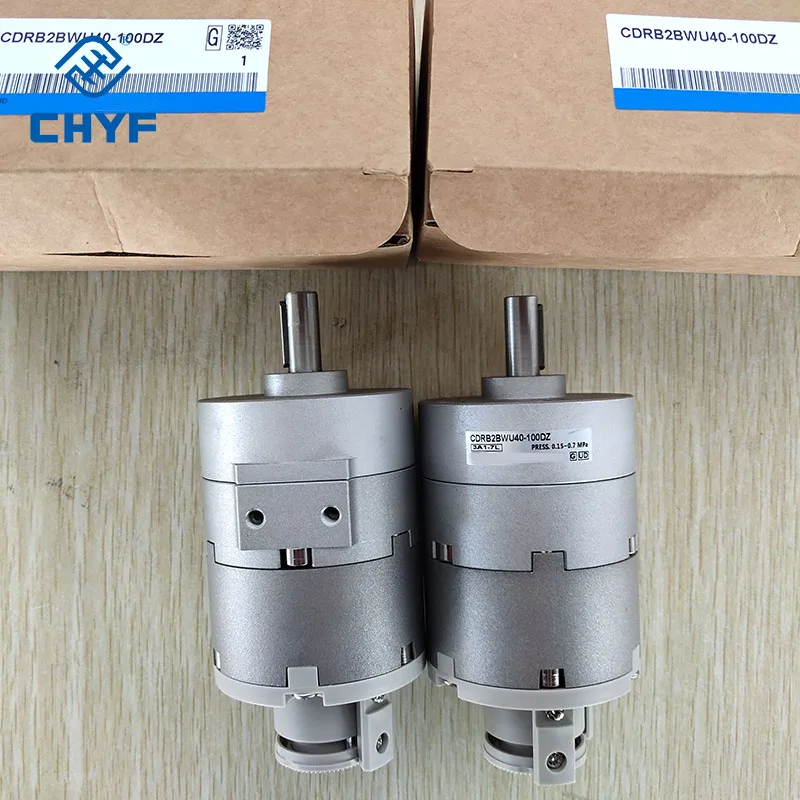
Pneumatic actuators are key devices used in industrial production and are contributing to the motion of valves. There are two types of pneumatic actuators: single-acting and double-acting. Each type of gear offers unique strengths and limitations, so it’s worth understanding the differences between each to determine if the best fit meets your particular needs.
Advantages and Disadvantages
Single action pneumatic actuator work by allowing air pressure to push the piston in one direction, with a spring that operates against it moving the piston back. This construction makes them simpler and less expensive than double-acting actuators. They can also be used in applications where a valve must stay in place when air pressure is not supplied. But single-acting actuators offer only simple control of the valve load and it may not be possible to employ a single-acting actuator when requiring accurate positioning.
In the case of double-acting pneumatic actuators, air pressure is directed to one side or the other of the piston and is able to 'stroke' that piston in either direction with much greater control over position. They are widely used in all applications where the positioning and fine control of loads is necessary. But double-acting actuators are usually more costly and complicated than single acting ones. There may be more maintenance as well since there are more parts involved in the design.
What Is the Best Pneumatic Actuator for Wholesale Buyers?
Wholesale purchasers interested in sourcing pneumatic actuators should take note of the particular demands imposed by their application. If the application only needs simple on/off actuation, and if cost is a primary factor, single-acting pneumatic actuators are likely to be the best solution. However, if there is a need for that level of accuracy and repeatability in operation then double acting pneumatic actuators would be preferred though they are more expensive, complicated affairs.
Ultimately, the decision to use a single-acting or double-acting pneumatic actuator will depend on the requirements of the particular application. Wholesale buyers would be well served to consider the own pros and cons of each in an effort to make a better-informed decision that not only satisfies their needs but also works within their budgets. Understanding the distinction between single-acting and double-acting pneumatic actuators will allow you choose the right one for ensuring that your industrial processes run smoothly.
When you are in need of high-quality single-acting and double-acting pneumatic actuators, look no further than CHYF. These actuators have important applications in industry, each having its own benefits and drawbacks.
Efficient and Cost-Effective Single-Acting Pneumatic Actuators
Single-acting pneumatic actuators are widely employed in industrial applications, as they are simple and cost effective. The actuators are pneumatic devices that cause a piston to move in on direction by air pressure, and the motion is controlled accurately. One of the key advantages to single-acting actuators is their ability to work with a single air supply, making them convenient for installation and maintenance. Furthermore, single-acting actuators are compact in dimension and lightweight design which allows for a limited space use. Incidentally, single-acting actuators are reasonably common in industrial applications.
Two-way pneumatic actuators have their own advantages and disadvantages in automation applications. These actuators operate through a pneumatic pressure, which allows the piston to travel in two directions and a greater degree of spatial flexibility and control is achieved. One kind of advantages, for example, are exerting larger force and running faster compared to the single-acting actuators. This makes it good for when you need to do a given amount of work with higher power and/or more precision. But one shortcoming of double-acting actuators is their cost and complexity. Two air supplies are needed to operate these actuators and installation and maintenance costs can raise as a result. Also, double-acting actuators are large-sized and heavy in the construction than single-acting actuators, so that there is a problem in that they have a difficulty to be disposed on reduced space.
Conclusion
Single-acting pneumatic actuator and double-acting pneumatic valve actuator both have their own merit not only application in industry market yet disadvantage. CHYF has good quality actuator that will meet all of the needs and likes. Whether you need a solution to control linear motion, an alternative to hydraulic or electric actuators, or just need peace of mind that your performance demands will be met with a modular design, the CHYF pneumatic actuator product line provides the perfect and reliable solution at the lowest total cost-of-ownership. As you determine the best actuator for your automation processes, keep in mind what you need and what you wish to spend.